43.81°N 11.35°E, Fiesole, Tuscany
Castello di Vincigliata
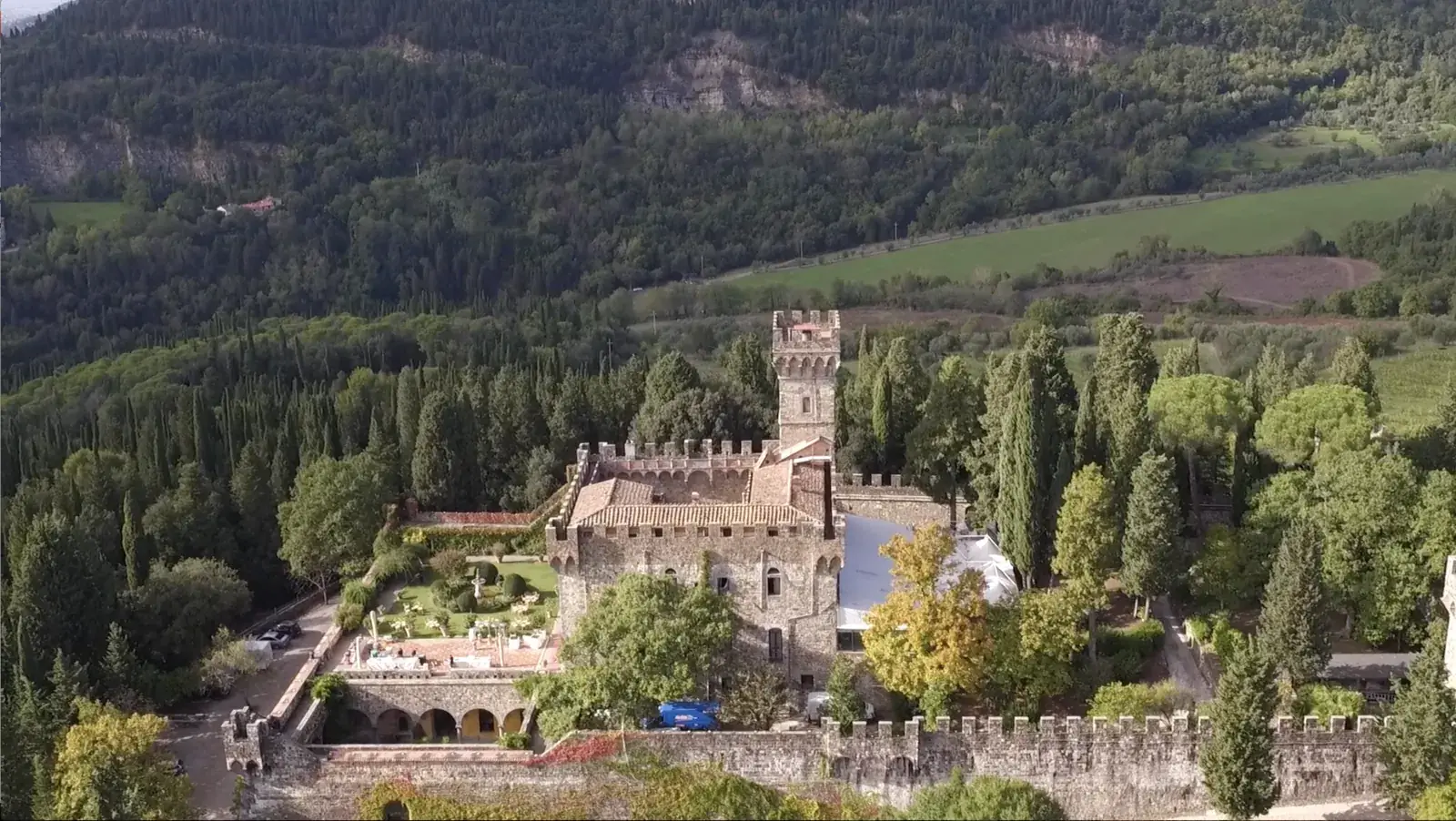
John Temple Leader's neo-Gothic castle in the hills of Fiesole, for years a wedding venue above Florence: today it appears closed and for sale.
Photo: Maxcivi, Wikimedia Commons, CC BY-SA 4.0
Vincigliata is first recorded in 1031, when the hill east of Fiesole belonged to the Visdomini; it then passed to the Boccia, the Bonaccorsi and the Alessandri, a branch of the Albizzi, who let it fall into ruin. In 1855 the wealthy Englishman John Temple Leader, in love with Tuscany, bought the ruins and, with architect Giuseppe Fancelli and hydraulic engineer Alessandro Papini, rebuilt them from scratch in neo-Gothic style, with works running until 1885: of the medieval fortress only the tower remains, everything else is the castle Temple Leader imagined, down to the cypresses, pines and holm oaks planted around it.
An Englishman bought a ruin in 1855 and spent thirty years turning it into the castle he had in mind: today that castle is waiting for its next owner.
Temple Leader had a medal struck reading "Vincigliatae Dominus", Lord of Vincigliata, and received Queen Victoria here, remembered by plaques in the castle; in 1913 a silent film, "Il sire di Vincigliata", told his story. Inside he installed a cycle of fourteenth-century frescoes from a Florentine chapel in Via della Scala, and sixteenth-century furnishings that are still in the halls. During the Second World War the castle was a prison camp for six British generals: one of them, Adrian Carton de Wiart, described it in his memoirs.
For years the castle hosted weddings and events on an exclusive-use basis, with Florence eight kilometres away and visible from the terraces. That is no longer the case: in November 2022 the press reported that the owning family had put it up for sale, in 2023 couples on a wedding forum reported it closed and unreachable by phone, and in 2025 two estate agencies were offering it, one with a press release describing it as a possible wedding venue for whoever buys it.
What it was like as a wedding venue
Until it closed, the castle was hired exclusively for ceremonies of up to 200 guests outdoors and dinners for 150, in the courtyard, on the terrace overlooking Florence or in the halls with the fourteenth-century frescoes from Via della Scala. Symbolic ceremonies and blessings were held, including Protestant services, and on request a civil rite with the municipality of Fiesole's authorisation. This is useful for anyone who remembers the castle or sees it in photos of past weddings, not current conditions.
What is happening today
According to available reports, the castle is for sale and does not host events. If a new owner reopens it as a venue in future, we will update this page. For a wedding in the hills around Florence, or in a Tuscan castle, our guide to Tuscany wedding costs lists nine venues with 2026 prices.
What to see nearby
For a wedding or a multi-day event, the surroundings become part of the programme: welcome activities, excursions for guests, the day after the ceremony.
- Fiesole archaeological area: a first-century-BC Roman theatre still used for the Estate Fiesolana concerts, with baths, an Etruscan temple and an archaeological museum.
- Convento di San Francesco: a monastery at the top of the Fiesole hill, with one of the finest views over Florence.
- Badia Fiesolana: an eleventh-century Romanesque church with an inlaid marble façade, now home to the European University Institute.
- Piazza Mino and Fiesole cathedral: the heart of the town, with the cathedral of San Romolo and the nearby Museo Bandini of early Renaissance art.
- Florence: the historic centre is fifteen minutes away, so the event on the hill can be combined with a visit to the city.
Frequently asked questions
Can you still get married at Castello di Vincigliata?
According to available reports, no: the castle has appeared closed and for sale since 2022, and we found no confirmation of recent weddings. If it reopens as a venue, we will update this page.
Who built the castle as it is today?
John Temple Leader, an Englishman who bought the ruin in 1855 and had it rebuilt in neo-Gothic style by architect Giuseppe Fancelli, with works lasting until 1885.
Where else to marry near Florence?
Our guide to Tuscany wedding costs lists nine venues across Chianti, Siena and Arezzo with 2026 prices, plus the Comune di Firenze's fees for a civil ceremony.